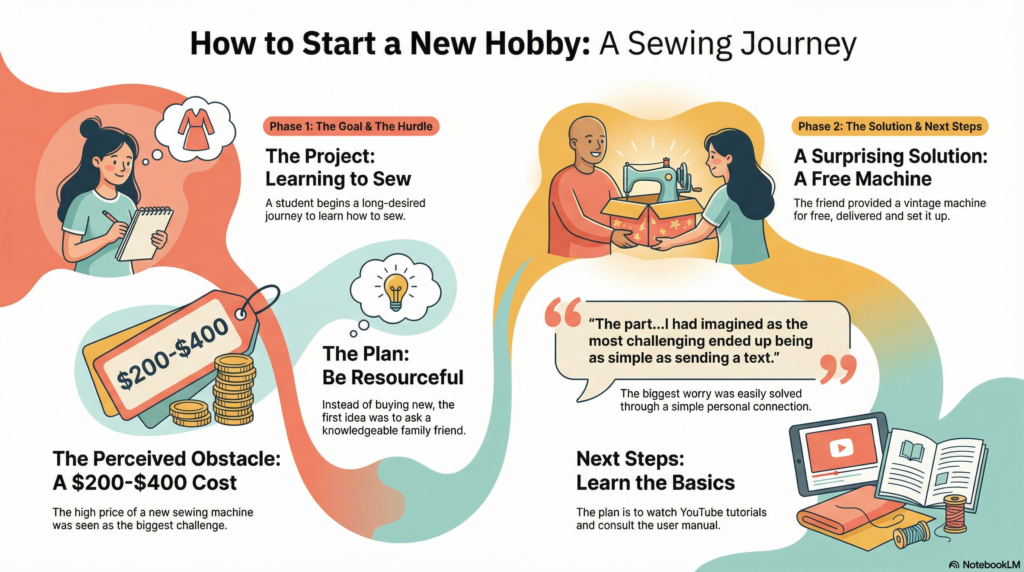
In class today, I completed the in-class activities and used NotebookLM to create an infographic about my first free inquiry blog post. I think it did a very good job of creating this infographic, but there is definitely room for improvement. I thought it was interesting, and likely a coincidence, but the graphic they made for me actually looks quite similar to me, despite the fact that there is no images of my anywhere on my blog. This is likely just a coincidence as dark hair is obviously quite common, but it was interesting to me!
While AI is a very powerful tool, there are certainly some blatant limitations. The first one that comes to mind for me, as someone who completed an undergraduate degree in the faculty of science, finishing after the creation of ChatGPT, its accuracy. When ChatGPT first launched, I thought it was quite useless for my schoolwork as it could not understand the complex scientific questions I was asking. Now, as AI evolves, it has gotten much better at answering scientific questions but there is still room for improvement, especially for use in post-secondary. Something else we have discussed often throughout this program is concerns about the use of AI in schools. As concluded by Flores et al (2025), in Artificial Intelligence and Students: An Overview from Teaching-Learning, Ethics-Morality, Emotions, Training, Cognition-Creativity, Social Construct, Recreation-Entertainment, there is a “…need for educational policies and school practices…” to support effective use of AI. These researchers agree on the importance of schools prioritizing cognitive thinking and creativity in AI-free environments, to ensure students don’t lose these ability. We discussed in class a news article from the 1970’s-80’s about elementary school teachers wanting to ban calculators in their math classrooms. I found this to be a strong reference to the current climate with Gen AI. Just like the teachers during the rise of calculators, we want students to be proficient in their skills and develop them instead of letting technology do all the work. In Rich’s words, “let AI do the mundane work, not the mind work.” Moreover, I think one of the most valuable skills for teachers to install in their students in modern times is how to correctly use Gen AI tools. If students understand how to use AI safely and efficiently it can be very beneficial for them. All students will inevitably use AI, so it is our job as educators to teach them when and how to use this technology.
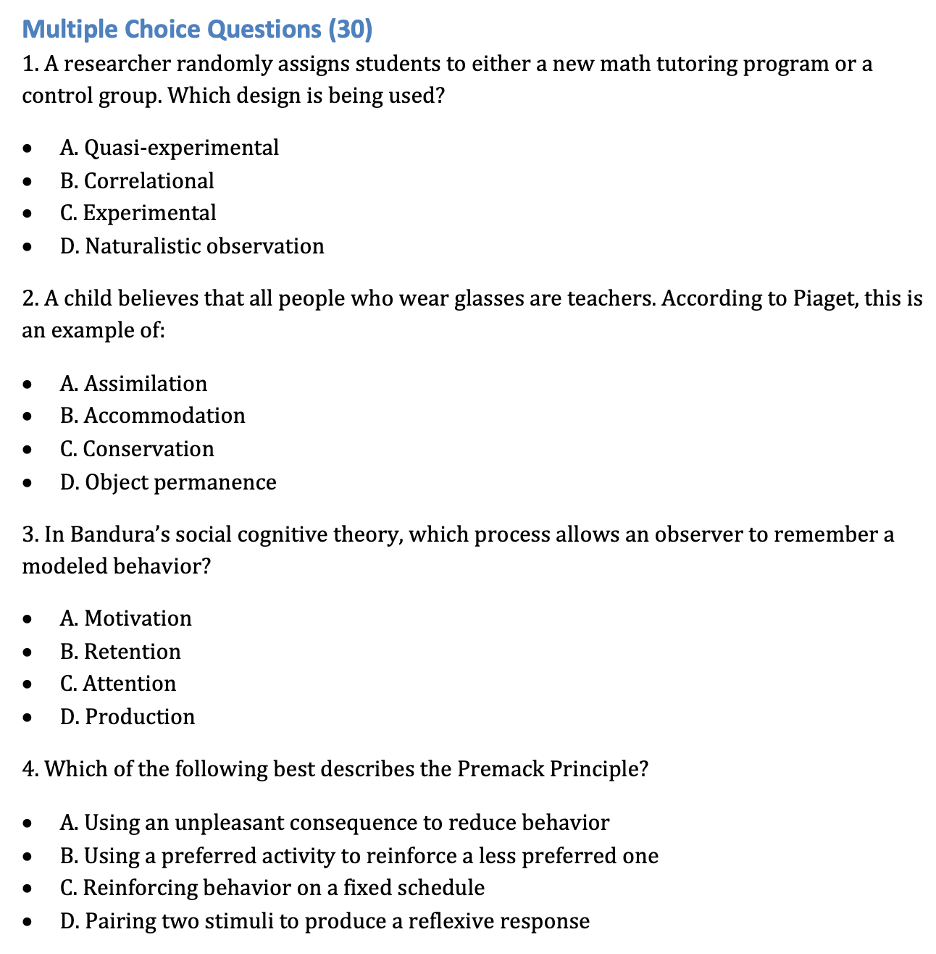
As a student, I have found many benefits to using AI. I have learned how to use these chatbots as a tool to supplement my learning, particularly when studying. For example, prior to a midterm last semester, I created a handwritten set of notes and input them into ChatGPT and asked it to create a university-level exam, including the format of the midterm I was preparing for. It was able to output quality multiple choice questions that served as great practice for me before the midterm. While I don’t accredit my entire success on this test to ChatGPT, it was certainly a valuable tool to support my studying, and I achieved an A+ on the exam. I’ve inserted a photo of a few of the practice questions ChatGPT provided me, from this chat.
Another concern I have when I think about the use of AI is the negative effects its use has on the environment. Not only does AI use large amounts of water, but it also uses massive amounts of energy and generates the emission of greenhouse gases, furthering the damage to our planet. Climate change is worsened by the use of AI which should deter people from overusing these technologies.